











Cat flu is one of the most frequently seen illnesses at Pets Oasis — and with attentive care, the great majority of cats recover fully.
What is cat flu?
“Cat flu” is the collective term for a group of upper respiratory infections affecting a cat’s nose, eyes, mouth and throat. The condition is most often triggered by two viruses — feline herpesvirus and feline calicivirus — sometimes accompanied by bacterial co-infections. It moves very readily from cat to cat but carries no risk to people or other household animals.
Healthy adult cats generally recover with supportive care. Kittens, older cats and those with existing health conditions are at greater risk of serious illness, so early veterinary attention always makes a difference.
How do cats catch it?
The main route of transmission is direct contact with an infected cat — through sneezing, mutual grooming, or the sharing of food bowls and bedding. The viruses also travel on human hands, clothing and cleaning equipment, making cat flu a particular hazard in catteries, shelters, multi-cat homes and among the stray cat populations found across Abu Dhabi.
Lifelong carriers: Many cats that recover from cat flu carry the virus indefinitely. They look and behave normally but can shed the virus again during stressful periods — such as moving home, a boarding stay, or welcoming a new pet. This is a well-understood and manageable outcome.
When to see a vet
Signs to watch for
Symptoms usually appear within a few days of exposure and can include:
- Sneezing and a runny nose
- Runny, red or sore eyes
- Dribbling, mouth ulcers or reluctance to eat due to mouth pain
- Loss of appetite and low energy
- A high temperature
Please contact Pets Oasis promptly if your cat is unwell.Reach out to us if your cat has stopped eating, is breathing with visible effort or with its mouth open, has an eye that appears painful, cloudy or closed, or if you have a young kitten showing any of the above. Eye problems in particular require prompt attention — delayed treatment can permanently affect your cat’s sight. Please call ahead before bringing your cat to the clinic so our team can prepare an isolation space and protect our other patients. |
How is it diagnosed and treated?

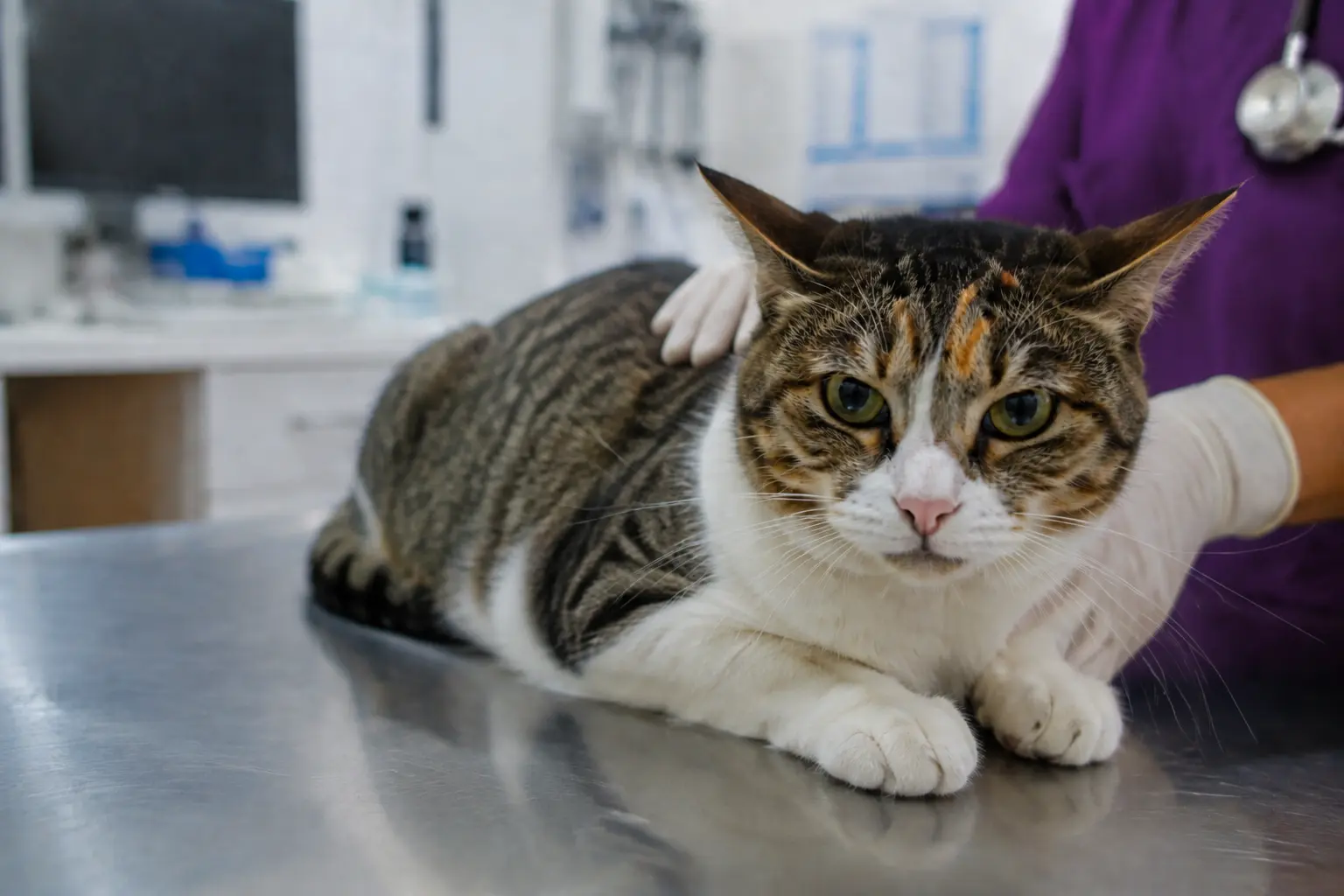
A clinical examination is usually sufficient for our team to identify cat flu; in cases where the exact pathogen matters, we run a swab test. Because the illness is predominantly viral, treatment focuses on supporting your cat while its own immune system clears the infection — this includes fluids for dehydration, gentle cleaning of the eyes and nose, steam or nebulisation to relieve congestion, pain relief for mouth ulcers, and warm, strongly scented food to stimulate the appetite.
Antibiotics are prescribed only when a bacterial infection is confirmed — not as a routine measure for every runny nose — and a specific antiviral can be used for severe herpesvirus eye involvement. With consistent nursing care, most cats recover noticeably within one to two weeks.
A note for cat owners
If your cat has active signs of illness, keep it away from other cats in the household and avoid sharing bowls, bedding and any items that could carry the virus. Good hygiene and thorough disinfection of all shared surfaces will help reduce the risk of spreading the infection to your other pets.
How to protect your cat
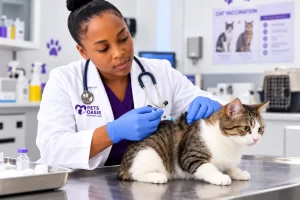
Vaccination is the single strongest protection available. While it cannot prevent every infection, it dramatically reduces how severe cat flu becomes for vaccinated cats.
- Vaccinate kittens on schedule and complete the full course, then maintain annual boosters for life — your Pets Oasis vet will advise the right timing for your cat.
- Reduce stress, especially around moving home, boarding stays or the arrival of a new cat, as stress reliably triggers flare-ups in carrier cats.
- Keep any cat with active signs away from housemates, and do not share bowls or bedding between them.
- If a cat has been unwell at home, ask our team about the correct disinfection approach — ordinary wiping is often not enough to eliminate the virus.
The key points• Cat flu is common and very contagious between cats — but it is treatable. • Kittens and unwell or older cats carry the greatest risk. • It does not spread to people. • Many cats become lifelong carriers and may flare up under stress — this is manageable. • Vaccination significantly reduces severity; keep your cat’s boosters current. • If your cat stops eating or an eye looks painful, contact us without delay. |
Protect your cat — book a vaccination today.
Whether you are ready to begin your kitten’s vaccination schedule or you are concerned about a cat that seems unwell, our team at Pets Oasis is here to help. Contact your nearest Pets Oasis veterinary branch to book an appointment.
This article is general information for cat owners and is not a substitute for professional veterinary advice. If you are worried about your cat, please contact your veterinarian.
