





What is Parvovirus?
Parvovirus (“parvo”) is a virus that attacks the fastest-growing cells in a dog’s body — mainly the lining of the gut and the bone marrow, where the cells that fight infection are made. That combination causes severe vomiting and diarrhoea and leaves the dog unable to defend itself against other infections. It is most dangerous in puppies.
The virus is extremely tough — it can survive in the environment for months to over a year and resists many ordinary household cleaners. It mainly affects dogs and does not make people sick.
How do dogs catch it?
Almost always through contact with the faeces of an infected dog, or with anything the virus has contaminated — the ground, bedding, bowls, and even hands, clothing and shoes. Because the virus is so hardy, it is easily carried home on footwear, so even a dog that never meets another dog can be exposed if it is unvaccinated.
It spreads most easily wherever unvaccinated dogs gather — parks, kennels, pet shops and breeding or rescue settings. Unvaccinated puppies are by far the most at risk.
Signs to watch for
Signs can appear suddenly and may include:
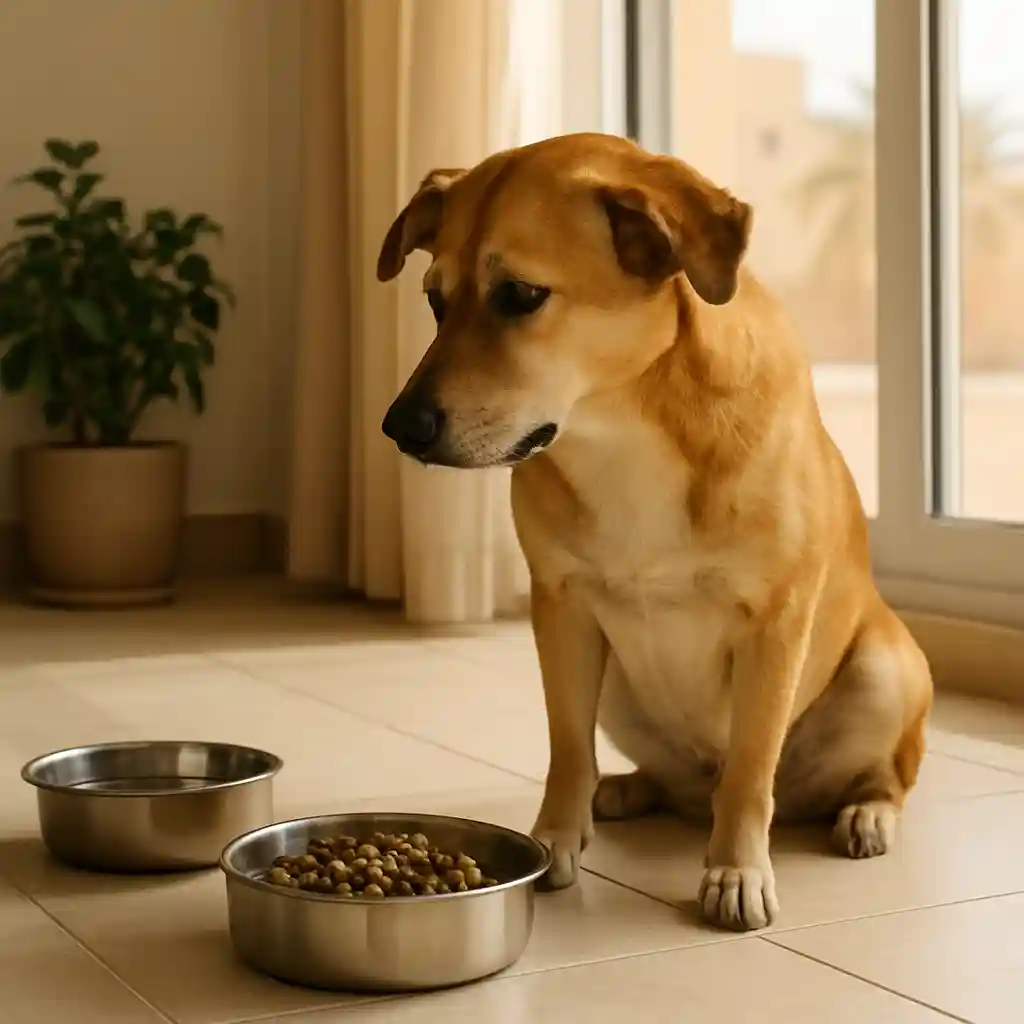
- Loss of appetite and unusual tiredness
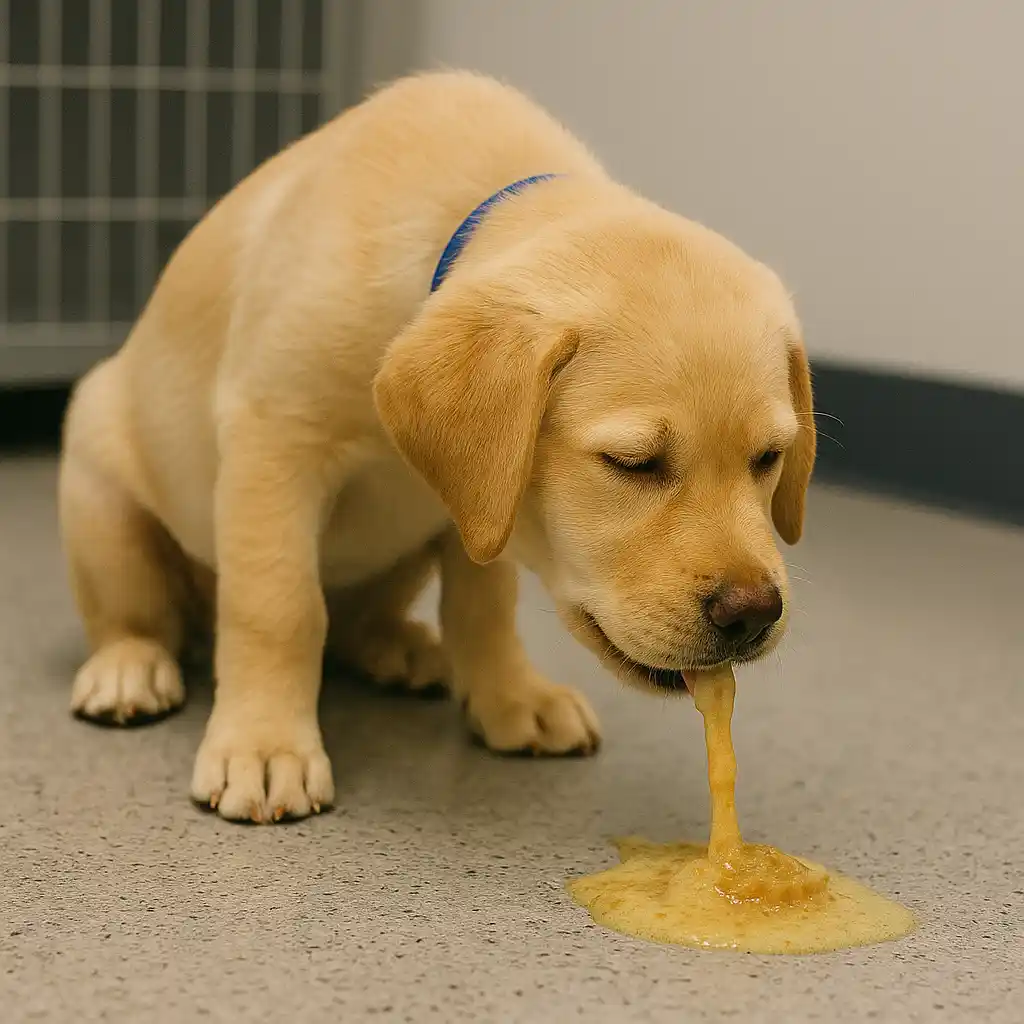
- Vomiting, often repeated
- Diarrhoea, frequently with blood and a strong smell
- A hunched, painful-looking belly
- Rapid weakness and dehydration
In young puppies the illness can move alarmingly fast, so never take a “wait and see” approach.
| When to see a vet — quickly
Parvo is an emergency. If your dog — especially a puppy or an unvaccinated dog — goes off its food, is vomiting or has diarrhoea (particularly with blood), or seems weak, contact us the same day. Early treatment makes a real difference to survival. Please call ahead before you arrive, so our team can prepare an isolation area and protect the other animals in the clinic. |
How is it diagnosed and treated?
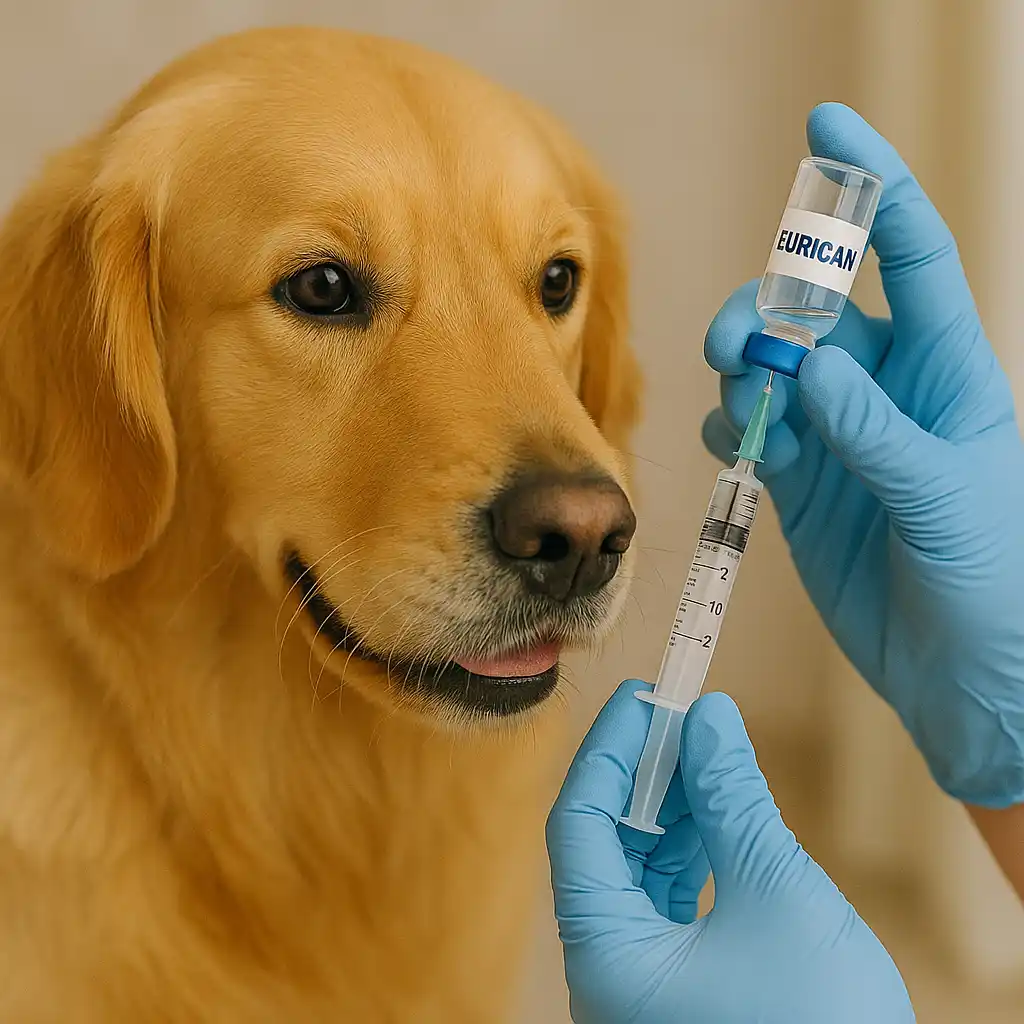
We can usually confirm parvo quickly with a simple in-clinic test and a blood count, and — PETS OASIS ABU DHABI — in-house PCR testing for a fast, accurate result.
Treatment is about supporting your dog intensively while its own immune system fights the virus: fluids to correct dehydration, medication to control vomiting and pain, antibiotics to prevent secondary infection, nutritional support and round-the-clock nursing in isolation. A newer antibody treatment that targets the virus directly is now available in some cases and can help when given early. Most dogs — particularly those brought in quickly — recover well with proper hospital care.
How to protect your dog
Vaccination is highly effective and is the single best thing you can do.
- Vaccinate puppies on schedule and complete the full course — puppies need a series of vaccinations finishing at around 16 weeks of age or older, because the protection they inherit from their mother can block earlier vaccines from working. Your vet will set the exact timing.
- Keep booster vaccinations up to date throughout your dog’s life.
- Keep unvaccinated puppies away from parks, unknown dogs and high-traffic areas until they are fully protected.
The key points• Parvo is serious and highly contagious — but preventable. • Puppies and unvaccinated dogs are most at risk. • It does not make people sick. • Completing the puppy vaccination course and keeping boosters up to date is the best protection. • If your dog shows signs, act fast — early care saves lives. |
Protect your dog — book a vaccination today.
Our team is here to help, whether you’d like to start your puppy’s vaccinations or you’re worried about a dog that seems unwell. Contact Pets Oasis to book an appointment.
