



Finding dog hair on the sofa, your clothes and the floor is part of life with a dog, but knowing how to stop dog shedding from getting out of hand makes life easier for you and your pet. At Pet Oasis Abu Dhabi, a veterinary clinic in Abu Dhabi dog owners can rely on, we believe a healthy coat starts with understanding what is normal and what is not. No routine stops shedding completely, but the right habits can reduce it a lot.
Why Do Dogs Shed?
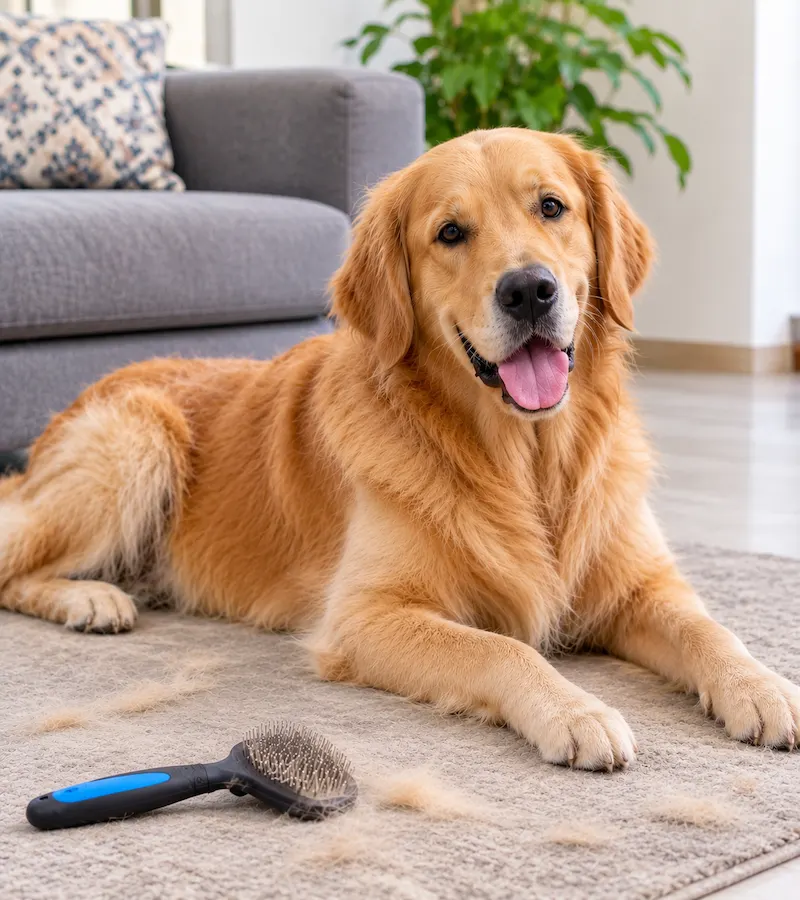
Shedding is how dogs get rid of old or damaged hair. According to the American Kennel Club, coat type plays a big role: dogs with thick double coats, such as Golden Retrievers, are more likely to shed year-round.
Other factors that change how much hair you see:
- Season: Many dogs shed most in spring and fall, triggered by changes in daylight and temperature.
- Indoor living: Dogs kept in air-conditioned homes with steady lighting may shed lightly all year.
- Skin and health problems: Allergies, parasites and infections can increase hair loss.
- Stress and diet: Changes in routine or an unbalanced diet can affect coat quality.
Normal Seasonal Shedding vs Excessive Hair Loss
Normal shedding is gradual and even. Seasonal shedding usually lasts a few weeks to a couple of months, then settles.
Excessive dog hair loss looks different. Watch for:
- Bald patches or thinning fur
- Red, sore or flaky skin
- Constant scratching, licking or chewing
- A dull, brittle coat
- A sudden jump in shedding
These signs can point to allergies, hypothyroidism, fleas and ticks, or skin infections, and they need a vet’s opinion.
10 Vet-Informed Tips to Reduce Dog Shedding
- Brush regularly. Heavy shedders may need brushing several times a week, or daily in peak season. Brushing removes loose hair before it lands on your floor.
- Choose the right brush. Short coats do well with a rubber glove or bristle brush. Thick or long coats need a slicker brush or undercoat rake. Detangle first and use gentle pressure.
- Bathe sensibly. A moisturising dog shampoo helps loosen dead hair. Avoid over-bathing, which can dry the skin, and dry the coat fully afterwards.
- Book professional grooming. A groomer can remove loose undercoat safely. Our dog grooming in Abu Dhabi service can suit your dog’s coat type. Ask before shaving a double coat, as very short hair can leave skin exposed to the sun.
- Feed a balanced diet. Choose a complete food suited to your dog’s age and size. Omega-3 fatty acids may support skin health, but they are not a guaranteed fix, so ask your vet before adding supplements.
- Watch for dry skin. Constant air conditioning can dry some dogs’ skin. Keep fresh water available and mention flaking to your vet.
- Control fleas and ticks. Parasites irritate the skin and trigger scratching and hair loss. Read our guide on flea and tick treatment for dogs and use only products your vet recommends.
- Treat skin problems early. Allergies and infections rarely clear on their own. Our dermatology team can help identify and treat common skin problems.
- Reduce stress. Keep a steady routine and give daily exercise and mental stimulation. Stressed dogs may shed more.
- Schedule regular check-ups. Routine pet health check-ups help catch problems early, and diagnostic tests such as blood work in our laboratory can help look for underlying causes of heavy hair loss.
When to See a Vet About Dog Shedding
Book a veterinary checkup if your dog has:
- Bald or thinning patches
- Red, inflamed or smelly skin
- Scratching or licking that disrupts sleep or play
- Visible fleas, ticks or scabs
- Shedding that is sudden, patchy or lasts well beyond the usual season
- Low energy, weight change or appetite change alongside hair loss
Do not treat these at home with guesswork. The cause matters, and the right treatment depends on it.
Final Thoughts
Shedding is natural, but you can keep it manageable with brushing, sensible bathing, a balanced diet, parasite control and regular checkups. If something looks off, early advice saves your dog discomfort. You can request an appointment with our team whenever you are concerned about your dog’s coat or skin.
FAQs About Dog Shedding
Can you stop a dog from shedding completely?
No. Shedding is a natural process, and all dogs lose some hair. Regular brushing, a balanced diet and parasite control can reduce it and keep the coat healthy.
How often should I brush my dog?
It depends on the coat. Heavy shedders may need brushing several times a week, or daily during peak shedding. Lighter shedders still benefit from regular brushing.
Does shaving a dog reduce shedding?
Not reliably. Shaving does not stop hair growth or shedding, and a very short cut can leave a double-coated dog’s skin exposed to the sun. Ask your groomer or vet first.
Do supplements stop dog shedding?
They are not a guaranteed solution. Some, such as omega-3 fatty acids, may support skin and coat health, but speak to your vet before starting any supplement.
When is a dog shedding a sign of a health problem?
See a vet if you notice bald patches, red or irritated skin, constant scratching, a dull coat or a sudden increase in hair loss. These can point to allergies, parasites, infections or hormonal conditions.