
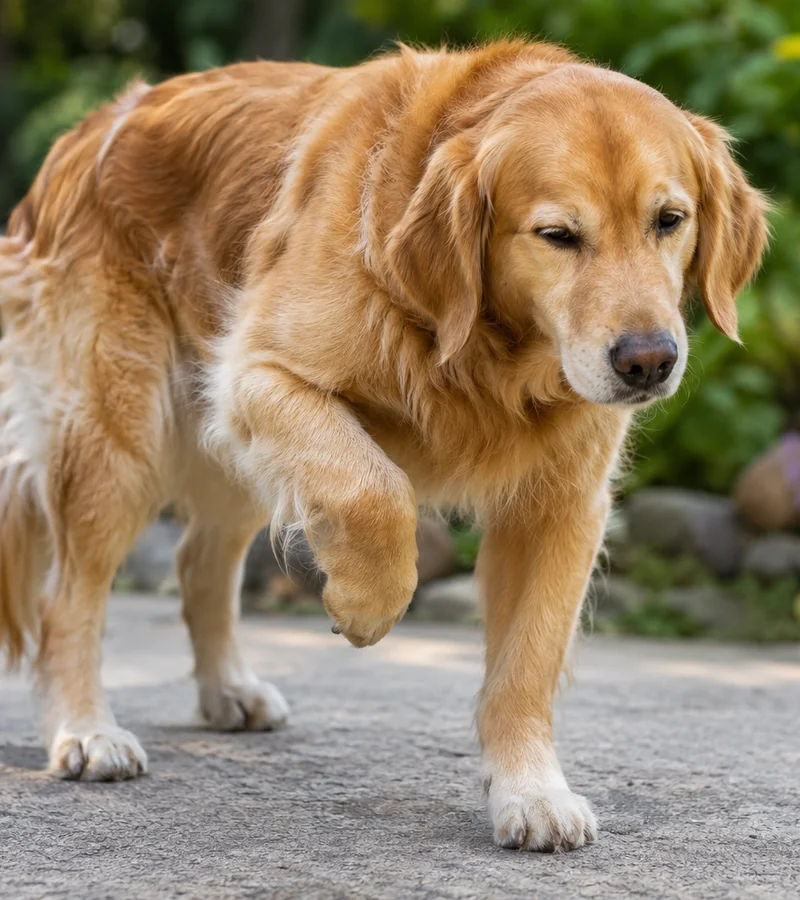



Your dog jumps off the sofa, yelps, and suddenly won’t put weight on a back leg. Or the limp creeps in slowly, stiff in the morning and almost gone by evening. Either way, a limp is your dog’s way of telling you something hurts.
Limping is a symptom, not a diagnosis. The cause can be as small as a thorn between the toes or as serious as a torn knee ligament or a broken bone. This guide covers the most common reasons dogs limp, what you can safely check at home, and the signs that mean your dog needs a vet today.
Sudden Limping vs Gradual Limping
The first thing a vet will ask is how the limp started, because it narrows down the cause quickly.
Sudden limping usually points to an injury: a cut paw, a torn nail, a sprain, a ligament tear or a fracture. It often follows a fall, a burst of rough play or an awkward landing.
Gradual limping builds over weeks or months. It’s more often linked to joint conditions such as arthritis or hip dysplasia, and occasionally to more serious problems like bone tumours.
Before your appointment, note a few details: which leg is affected, whether the limp is constant or comes and goes, and whether it’s worse after rest or after exercise. These small observations save time at the clinic.
Common Causes of Limping in Dogs
Paw injuries and foreign objects
The paw is the first place to look. Cuts, cracked or torn nails, thorns, glass, small stones and insect stings are all common. If your dog keeps licking or chewing one foot, the problem is probably there.
Hot pavement burns
This one matters in Abu Dhabi. During summer, asphalt, paving and sand get much hotter than the air, and paw pads can blister in minutes. Watch for limping after a walk, licking the feet, and pads that look red, darkened or peeling. A simple test: press the back of your hand on the ground for seven seconds. If it’s too hot for you, it’s too hot for your dog.
Sprains and strains
Pulled muscles and mild sprains happen during play, zoomies or jumping out of the car. The limp is usually mild and gets better with a day or two of rest.
Cruciate ligament tear
A torn cranial cruciate ligament (the dog version of a human ACL) is the most common cause of hind-leg lameness in dogs. In most dogs the ligament weakens gradually and then tears during ordinary activity, rather than in one dramatic accident.
Typical signs include holding up a back leg, touching only the toes to the ground, and sitting with the leg stuck out to one side. Large breeds and overweight dogs are at higher risk, and studies suggest 30 to 40 percent of dogs that tear one cruciate go on to tear the other within a year or two. Most cases need orthopedic care and often surgery, and the outlook after treatment is generally good. If surgery is recommended, our guide on what to expect from pet surgery in Abu Dhabi explains the process.
Kneecap dislocation (patellar luxation)
Common in small breeds such as Pomeranians, Chihuahuas, Yorkshire Terriers and Toy Poodles. The kneecap slips out of place, so the dog skips or holds the leg up for a few steps, then walks normally again once it pops back.
Arthritis
Arthritis is a leading cause of long-term limping, especially in older and overweight dogs. The classic pattern is stiffness after rest that eases once your dog warms up, along with reluctance to climb stairs or jump into the car.
Hip and elbow dysplasia
These are developmental joint problems seen mostly in large breeds such as Labradors, German Shepherds and Golden Retrievers. Signs can appear in young dogs and include a swaying walk, bunny hopping with the back legs, or front-leg lameness.
Fractures and dislocations
A dog with a broken bone or dislocated joint usually won’t put any weight on the leg. You may see swelling, a limb hanging at an odd angle, or obvious pain when it’s touched.
Tick-borne disease
Ticks are present in the UAE, and some tick-borne infections cause painful joints. A limp that shifts from one leg to another, especially with fever, tiredness or poor appetite, is worth a blood test.
Less common but serious causes
Bone cancer can cause a persistent limp in large, middle-aged or older dogs, sometimes with a hard swelling on the leg. Nerve and spinal problems may show up as dragging a paw, knuckling over the toes or weakness in the back legs. Both need prompt veterinary attention.
What You Can Safely Check at Home
If the limp is mild and your dog is otherwise bright and eating, you can do a careful check first:
- Be gentle and cautious. Dogs in pain may snap, even if they never normally would.
- Inspect the paw. Look between the toes, at each pad and at the nails for cuts, swelling or anything stuck.
- Feel the leg. Run your hand slowly down the limb and compare it with the other side for heat, swelling or a sore spot.
- Rest for 24 to 48 hours. Keep walks to short, leashed toilet breaks, and block stairs and furniture.
- Film your dog walking. A short video is very useful, because many dogs hide a limp at the clinic.
- Never give human painkillers. Ibuprofen, naproxen, paracetamol and aspirin can be toxic to dogs. Only use medication your vet prescribes.
When to Worry: Signs Your Dog Needs a Vet Now
Contact our emergency vet team straight away if your dog:
- Won’t put any weight on the leg
- Has a leg hanging loosely or at an unnatural angle
- Has a swollen or hot limb
- Has an open wound or is bleeding
- Is crying, shaking or panting from pain
- Is dragging a paw or is weak in the back legs
- Is limping along with fever, lethargy or loss of appetite
- Started limping after a fall or a car accident
Book a regular appointment within a few days if the limp hasn’t improved after 24 to 48 hours of rest, keeps coming back, or is a slow, ongoing stiffness in an older dog. Mild limps that linger are often caught early as partial ligament tears or early arthritis, which are easier to manage at that stage.
How a Vet Finds the Cause
Your vet will start with your dog’s history and watch them walk and trot. A hands-on orthopedic exam follows, feeling each joint for pain, swelling and instability. For a suspected cruciate tear, vets check how the shin bone moves against the thigh bone.
Depending on what they find, the next steps may include X-rays, blood tests to rule out infection or tick-borne disease, and occasionally joint fluid analysis. Treatment then matches the cause: rest and vet-prescribed anti-inflammatories for sprains, wound care for paw injuries, weight management and joint support for arthritis, and surgery for ligament tears, fractures or severe kneecap problems.
How to Help Prevent Limping
Not every limp can be prevented, but these habits lower the risk:
- Keep your dog lean. Extra weight puts constant strain on joints and ligaments.
- Exercise regularly. Steady daily exercise is better than long weekend runs after a quiet week.
- Walk in the cooler hours. In summer, go early in the morning or after sunset to protect paw pads.
- Keep nails trimmed. Overgrown nails change how your dog stands and walks.
- Use tick prevention year-round.
- Schedule joint checks for seniors. Routine pet health check-ups help spot arthritis before it becomes a daily limp.
Frequently Asked Questions
Can a dog’s limp go away on its own?
A mild limp from a small sprain or bruise often settles within a day or two of rest. If it lasts longer than 48 hours, gets worse or keeps returning, it needs a vet exam.
Why is my dog limping but not crying?
Dogs are very good at hiding pain. A dog that limps without whining is still uncomfortable, so a quiet limp shouldn’t be ignored.
Should I walk my dog if it’s limping?
Keep activity to short, leashed toilet breaks until the limp is gone or your vet gives the all-clear. Running and jumping can turn a partial injury into a complete one.
Get Your Dog’s Limp Checked at Pets Oasis
If your dog’s limp hasn’t settled, or something just doesn’t look right, our team at Pets Oasis, a trusted vet clinic in Abu Dhabi, can examine your dog, find the cause and plan the right treatment. For follow-up checks on long-term conditions such as arthritis, you can also book a home vet visit so your dog stays comfortable at home. A sudden, severe limp should always be seen at the clinic.
Request an appointment online or call us on +971 2 676 7100.
This article is for general information and isn’t a substitute for a veterinary exam. If you’re worried about your dog, contact your vet.
